
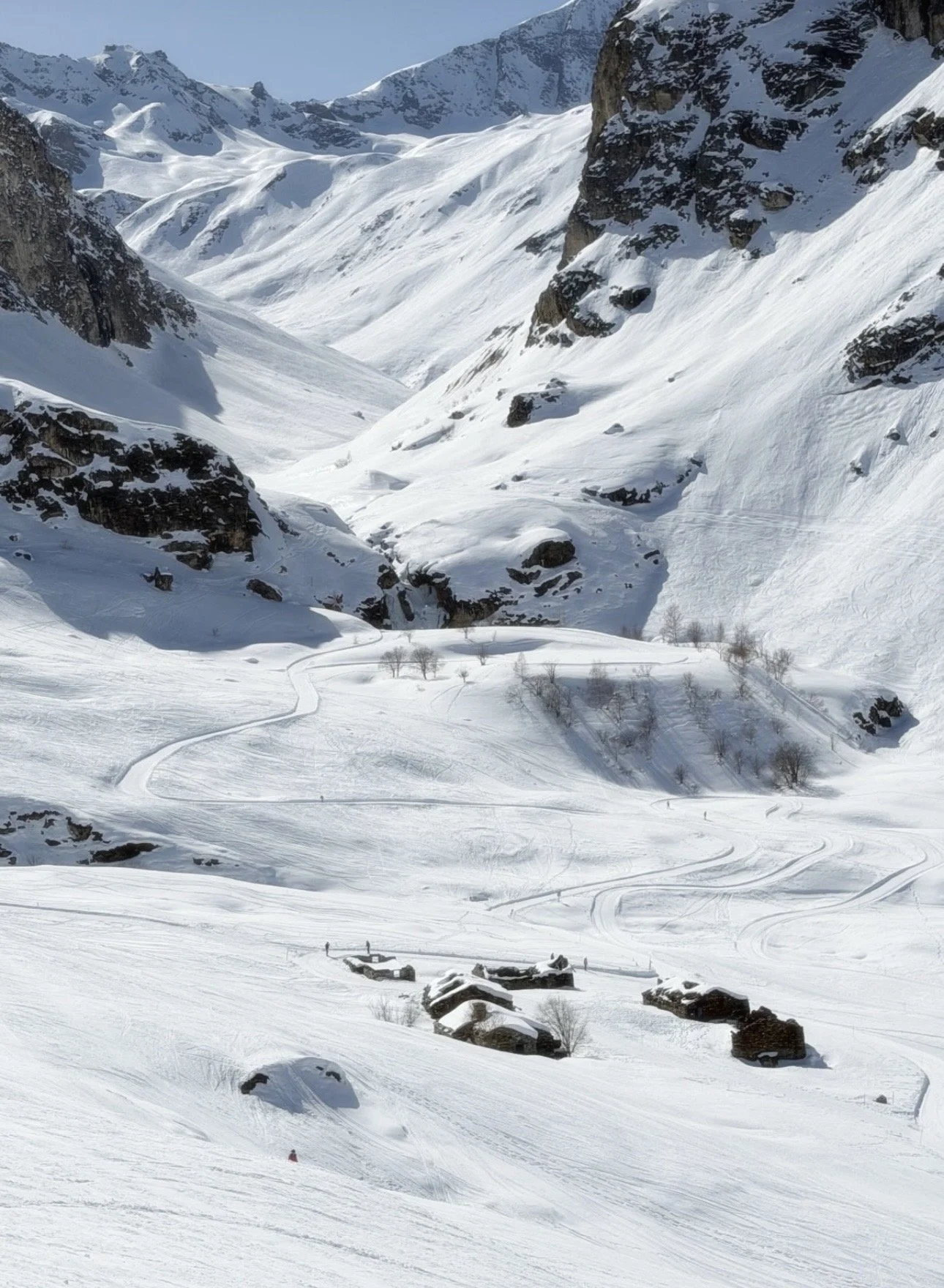
The end of the Manchet Valley in Val d’Isère.
When you come to Val d’Isère to ski, let’s be honest: it’s usually not to go cross-country skiing.
People come here for its vast alpine ski area, its 300 km of slopes connected to Tignes, Bellevarde, Solaise, and Le Fornet, its long runs, and its history, which is deeply intertwined with competitive skiing.
And that is precisely why a little gem has gone relatively unnoticed.
Val d’Isère also has a superb area for cross-country skiing.
Not necessarily the biggest. Not the one we hear the most about.
But it’s a place that, once you’ve laced up your cross-country skis, brings together a surprisingly wide variety of elements to make it a true hidden gem.
A Nordic ski resort hidden behind an alpine skiing giant
It's almost paradoxical.
At a resort less well-known for downhill skiing, the cross-country ski area would likely be much more prominently featured.
In Val d’Isère, he lives in the shadow of a giant.
And yet, when you consider what really makes for a great day of cross-country skiing, it checks off so many boxes: altitude, snow cover, snow quality, trail maintenance, scenery, varied terrain, and an exceptional setting.
Not to mention one nice perk: access to the cross-country trails in the Manchet area is free.
You don't need to buy a cross-country ski pass just to go for a few kilometers.
Put on your shoes and let's go.
The Manchet Valley: Our Playground
This is the heart of cross-country skiing in Val d’Isère.
From the village, you gradually move away from the ski lifts and enter the Manchet Valley.
And the atmosphere changes immediately.
The valley opens up before you, surrounded by mountains, with the trails winding through the landscape and the river running alongside part of the route.
It doesn't really feel like we're in one of the most famous ski resorts in the world anymore.
We're just… in the mountains.
It's that feeling that makes up a big part of the place's charm.
Snow. And usually really good snow.
That’s obviously one of Val d’Isère’s biggest advantages.
The village is located at an altitude of approximately 1,850 meters, and the resort enjoys particularly reliable snowfall. Its proximity to the Italian border allows it to benefit from the “Retours d’Est” phenomenon, which can bring significant amounts of snow to very specific areas of Val d’Isère and Tignes.
This reputation for reliability is best known in the world of alpine skiing.
But of course, the snow doesn't choose its skis.
Nordic skiing is also benefiting from this.
In addition, the trails are groomed regularly, ensuring great conditions for both skating and classic-style skiing.
For anyone who loves skiing, heading out early in the morning on a freshly groomed run in Le Manchet can hold some wonderful surprises.
And then there's the light
Val d’Isère also benefits from a location that offers plenty of sunshine, especially as the days begin to get longer. In fact, the resort highlights the combination of altitude, snow coverage, and long, sunny days as one of the key attractions of its spring skiing.
And in cross-country skiing, that makes a huge difference.
Because you don't drive through the countryside at 70 km/h.
We take the time to look at it.
The sun on the mountain peaks, the river, the snow, the silence of the valley…
The setting is truly part of the photo shoot.
And on some days, we can still change our perspective
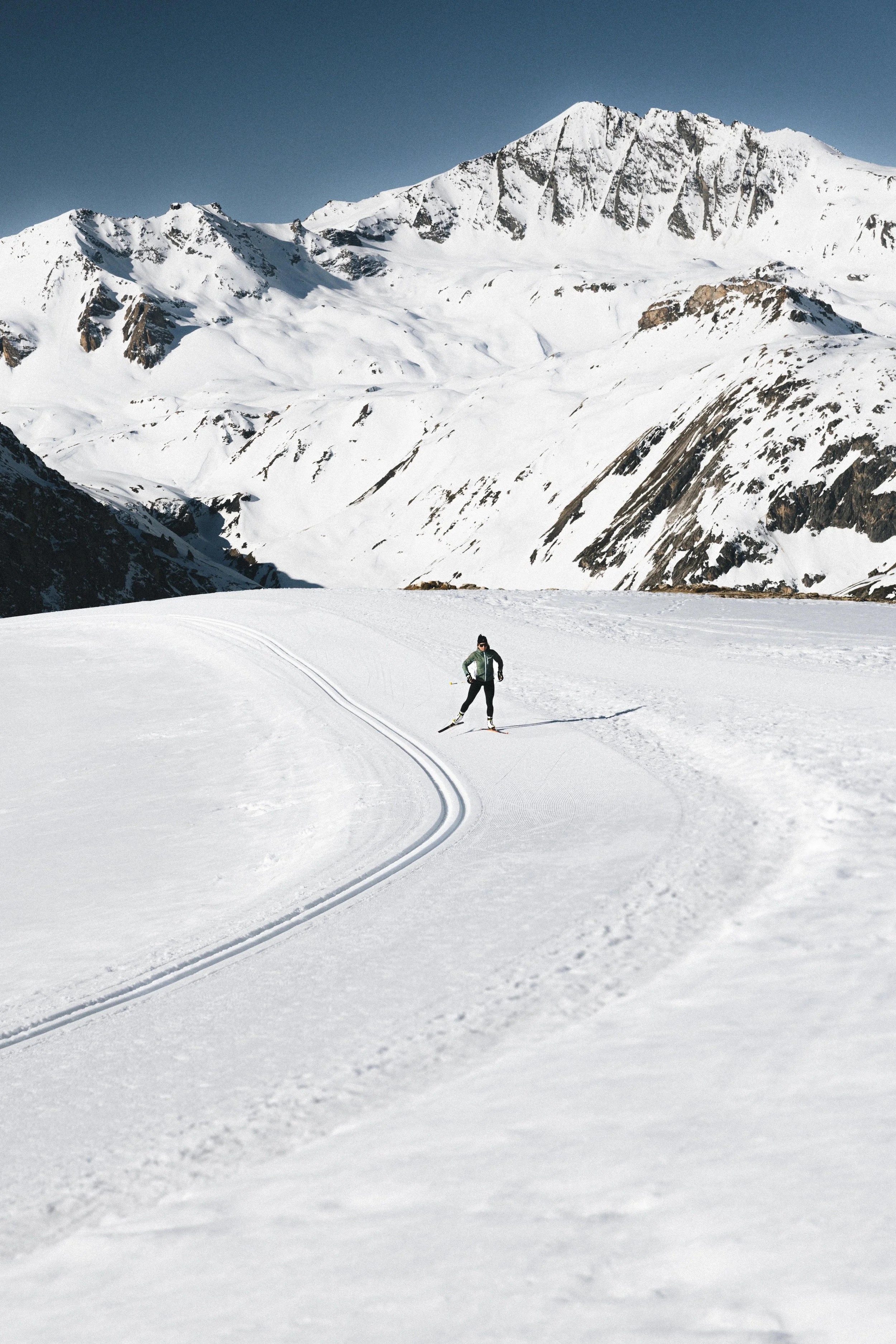
Cross-country ski trails around Lake Ouillette.
In fact, Le Manchet isn't the only way to experience Val d'Isère in a different way.
When conditions and logistics permit, it is possible to head up to higher elevations and explore the Solaise area and Lake Ouillette, located in a completely different setting. The lake is situated at a high elevation, at the foot of the Solaise slopes, in a landscape that offers unobstructed views of the surrounding peaks.
Up there, the experience is different.
We leave the valley floor behind and head into a much higher-altitude mountain environment.
Wide-open spaces, plenty of light, and a 360° panoramic view of the mountain peaks.
It's no longer just a cross-country skiing trip.
It's a real break at high altitude.
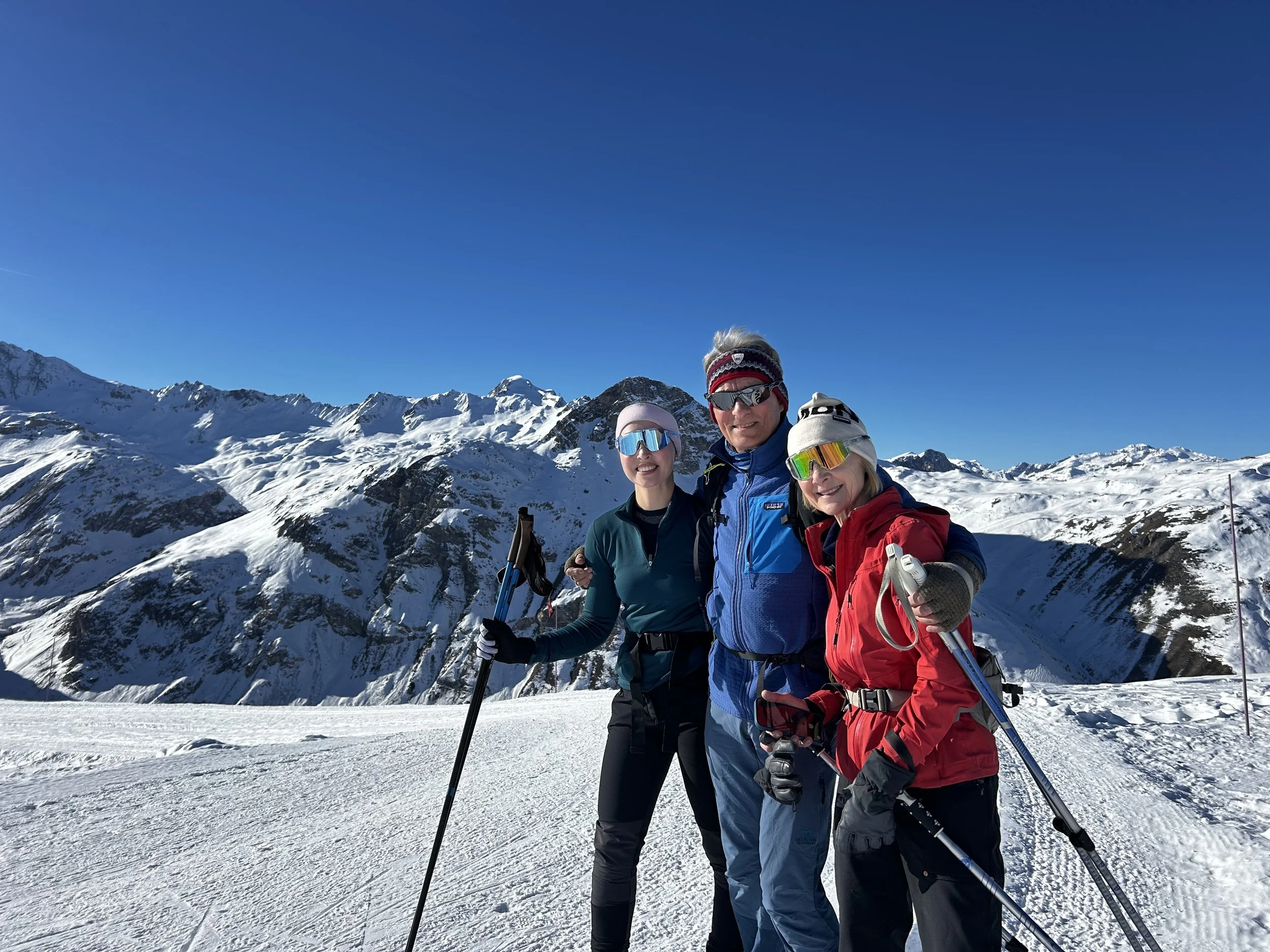
Selfie at the top of the Ouillette slopes in Solaise.
A small estate doesn't mean a small playground
This is probably the easiest mistake to make when comparing Nordic regions.
Look only at the number of kilometers.
Val d'Isère does not seek to compete with major destinations that are entirely focused on Nordic skiing in terms of this figure.
But in practice, that's not necessarily what matters.
At Le Manchet, there's plenty of variety for learning, taking a walk, working on your technique, or getting a real workout.
A main course to start.
Flat sections to practice sliding.
Hills to train on.
Downhill runs to improve your technique.
And above all, a course that can be enjoyed in many different ways, depending on your skill level.
A beginner and a very good cross-country skier can ski in exactly the same place without having the same experience at all.
"I've skied all over the world. And yet, I find this setting truly exceptional."
That's also one of the reasons why Nordic Base exists today in Val d'Isère.
Its founder, Léna Arnaud, has been involved in cross-country skiing for a long time. As a former elite athlete, she has had the opportunity to ski and train at numerous locations in France and abroad.
And his perspective on Val d'Isère is particularly interesting precisely because it doesn't come from someone who is new to Nordic skiing.
“Thanks to cross-country skiing, I’ve had the chance to travel and ski all over the world. And yet, I find the setting in Val d’Isère truly exceptional.”
It’s not necessarily the first place that comes to mind when you think of cross-country skiing, because the resort’s image is so closely associated with downhill skiing. But when you look at what we actually have here—the snow quality, the groomed trails, the elevation, the valley, the river, the scenery, and the chance to ski in completely different environments—it’s an incredible playground.
"It was precisely because I felt that this potential was somewhat overlooked that I wanted to start Nordic Base here. To introduce people to cross-country skiing and biathlon, of course, but also to show them this other side of Val d’Isère."
— Léna Arnaud, founder of Nordic Base
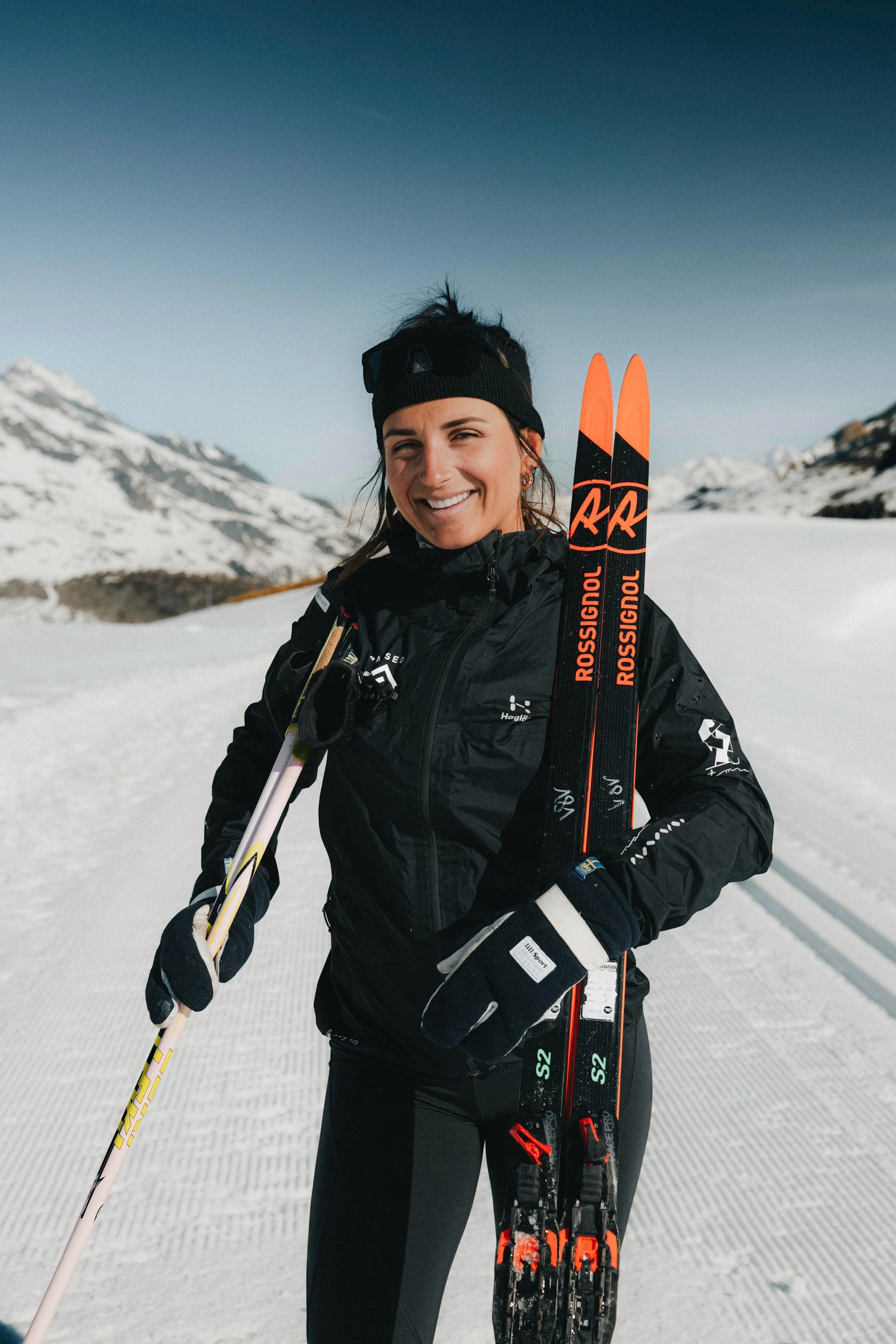
Léna Arnaud, the founder of the school on the Ouillette slopes in Solaise.
Come to Val d’Isère for the skiing. Leave with something else.
It might actually be the best way to experience Nordic culture here.
You don't have to come to Val d'Isère to go cross-country skiing.
Come ski at Bellevarde.
Come to Solaise.
Come and enjoy the Tignes–Val d'Isère ski area.
But set aside two hours each week.
One morning, set your alpine skis aside.
Get some cross-country skis.
Enter the Manchet Valley.
Follow the river.
And find out why, behind one of the world's most famous alpine ski destinations, lies perhaps one of its best-kept sports secrets.
Welcome to the other Val d’Isère.
