
Have you ever gone cross-country skiing? Have you ever held a rifle? Perfect.
A two-hour session is specifically designed to help you gradually discover both disciplines, without spending an hour on technique before you start having fun.
We take the time to understand the basics, then we quickly move on to games, challenges, and—inevitably—a little competition.
1. Let's start by getting to know each other
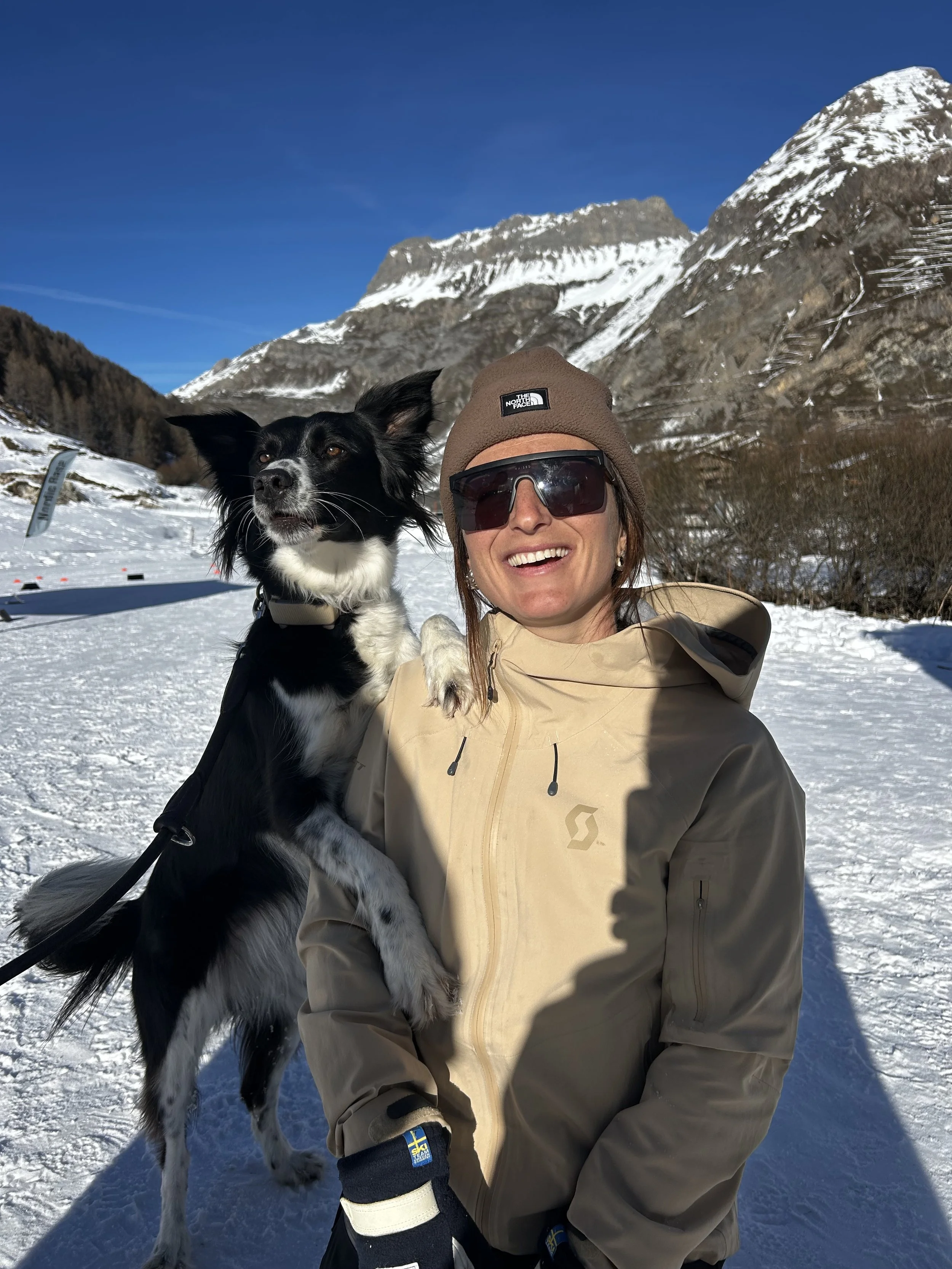
Léna, the school's founder.
Before we get to the skis, boots, and rifles, let's just take a few minutes to chat.
Who has ever gone cross-country skiing? Who enjoys downhill skiing? Who is athletic? Who isn't as athletic? Are you here to learn, have fun, or challenge yourselves as a family?
This allows us to gauge the group's energy level and, most importantly, to adapt the session right from the start.
Because a family with young children, a group of friends, and four athletes obviously don't need the same workout.
2. We'll get you set up
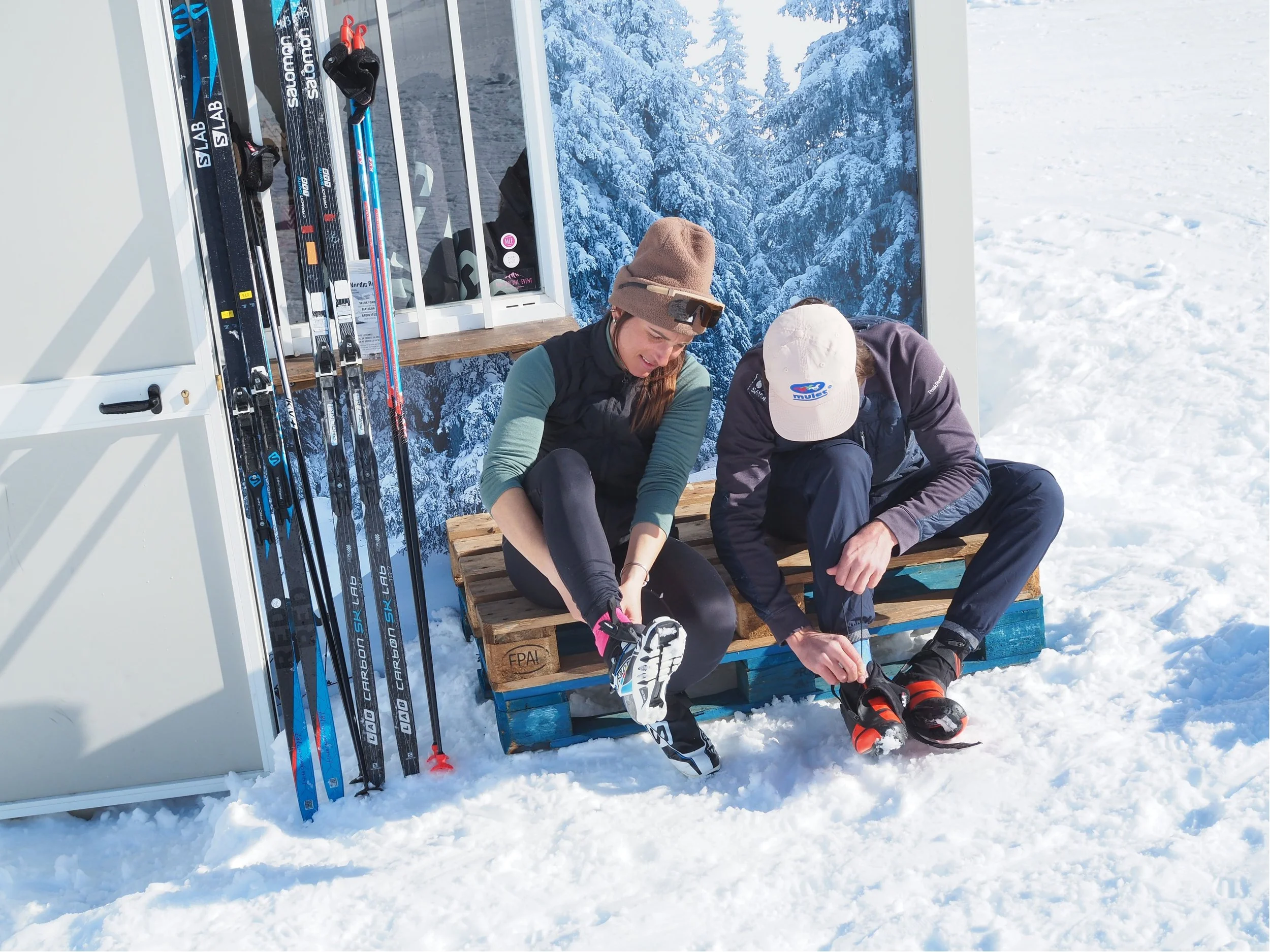
We get geared up before starting the activity.
Let's move on to the equipment.
Start by finding the right pair of boots: snug enough to give you good control over your skis, but above all, comfortable.
Next come the skis and poles.
It’s also a chance to quickly get a handle on the equipment you’ll be using: why the skis are so narrow, how the bindings work, why the heel stays free…
We'll also explain the difference between the two main cross-country skiing techniques: classic and skating.
No need for a twenty-minute theory lesson. A few explanations are all it takes, and then it’s already time to hit the slopes.
3. First Steps on the Slopes
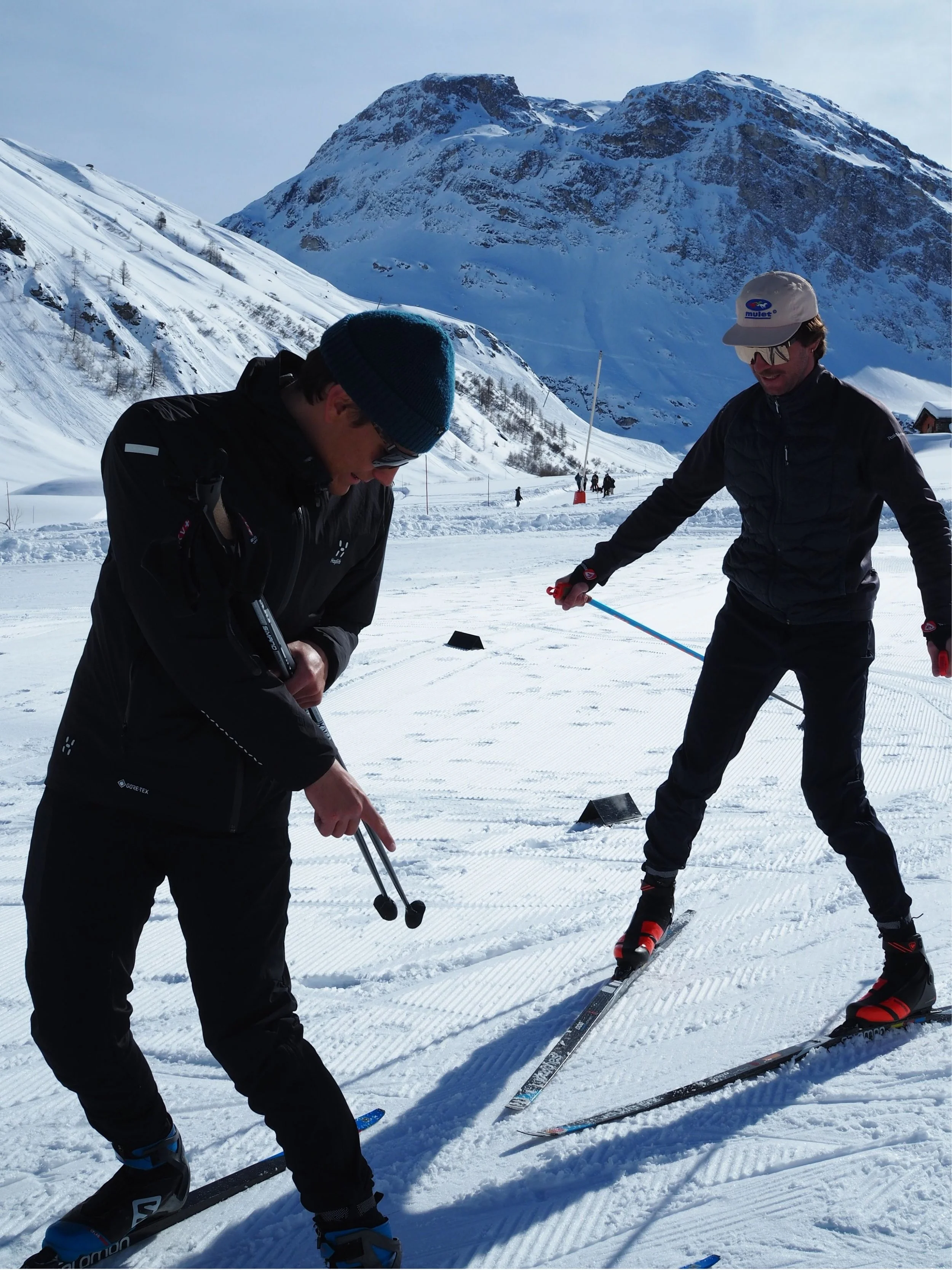
You have to learn how to slide… and how to stop!
That's usually when the first smiles appear.
Cross-country skis are lightweight, the boots are much more flexible than those used in downhill skiing, and the heel is free. So it feels quite different when you step into them for the first time.
We'll start off slowly with a few educational activities and short games.
The goal isn't to perform the perfect move right away, but to understand the basics: finding your balance, shifting your weight from one ski to the other, moving, gliding, turning… and, above all, knowing how to stop.
The exercises change quickly depending on the group.
And sometimes, surprisingly, a complete beginner who isn't very athletic does better than an excellent alpine skier.
In cross-country skiing, everyone has to be willing to rediscover some of that beginner's feeling.
4. Now it's time for biathlon
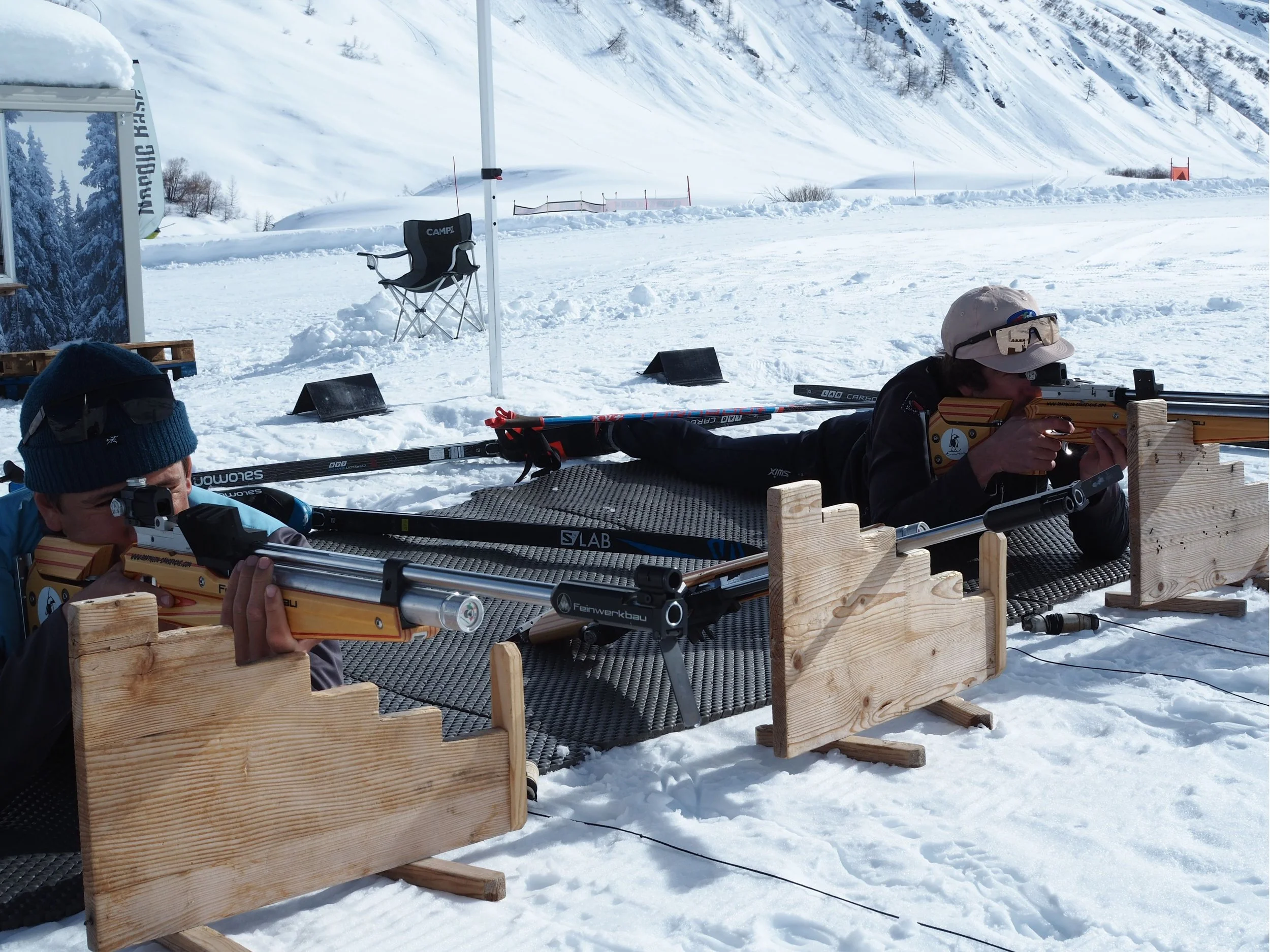
Focus on your shot to hit the bullseye.
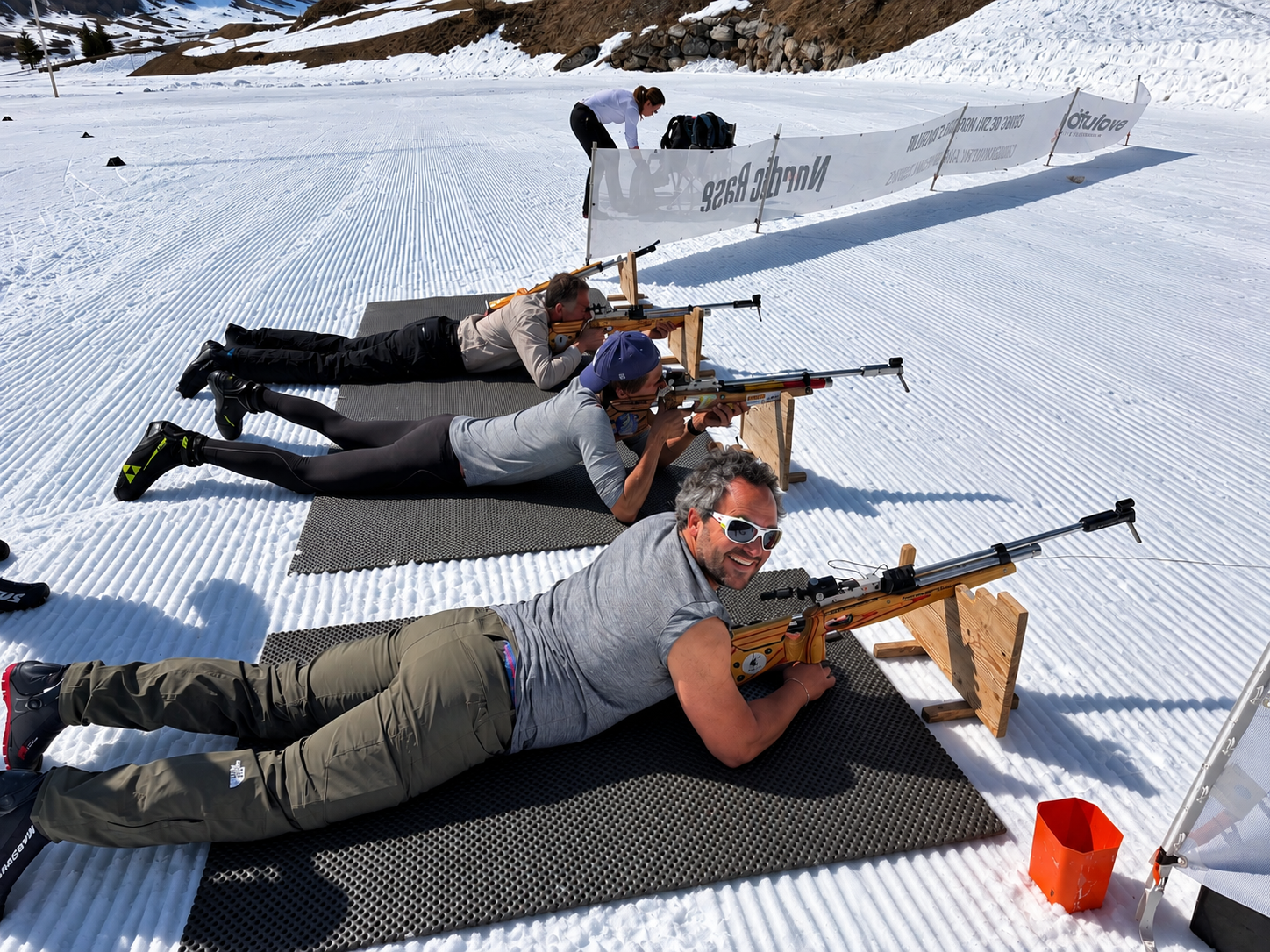
Once everyone is able to move, turn, and brake, we can add the second part of the exercise: shooting.
Let's start by taking a look at the rifle.
Operation, stance, aiming, breathing, safety… We take the time to explain the proper techniques before you fire your first shots.
Then the first shots are fired.
We usually start with a few test shots on cardboard, which helps you understand your shot and, if necessary, make a few adjustments.
The goal is simple: to gradually build consistency.
And once the first targets start falling, we can get down to business.
5. Battles, duels, and games of skill
That's often when the mood of the session changes.
We're kicking off the first shooting challenges.
Duels, battles, precision games…
The segments are intentionally very short and dynamic. At this stage, the goal isn't to wear you out just yet.
Instead, we tend to focus on certain aspects of our work without really realizing it: speed of setup, precision, concentration, and adaptability.
And most importantly, we're starting to keep score.
This is usually bad news for the group's spirit of cooperation.
6. And now, let's mix everything together
You know how to ski.
You know how to shoot.
All that's left is to discover what biathlon is really all about: combining the two.
We then set up a mini ski course, short enough to be accessible to everyone.
About 30 seconds of effort.
A few turns.
A little more speed.
Then she arrived at the launch pad.
And then, something changes.
Just a few minutes ago, hitting the targets seemed pretty easy. But after skiing fast, you now have to settle in, control your breathing, aim, and stay precise even as your heart beats faster.
That's exactly where you start to understand biathlon.
The races take place in a variety of formats: individual, relay, head-to-head, or team challenges, depending on the group.
The distances are kept short to ensure that the experience is dynamic, fun, and accessible, rather than turning the exploration into an endurance test.
Two hours later…
When they arrived, some of them had never set foot on cross-country skis before.
Two hours later, they know how to move, turn, and brake. They’ve grasped the basics of cross-country skiing, learned how a rifle works, learned to aim, and—most importantly—experienced what makes biathlon so unique: switching from physical exertion to precision in a matter of seconds.
And usually, someone in the group calls for a rematch.
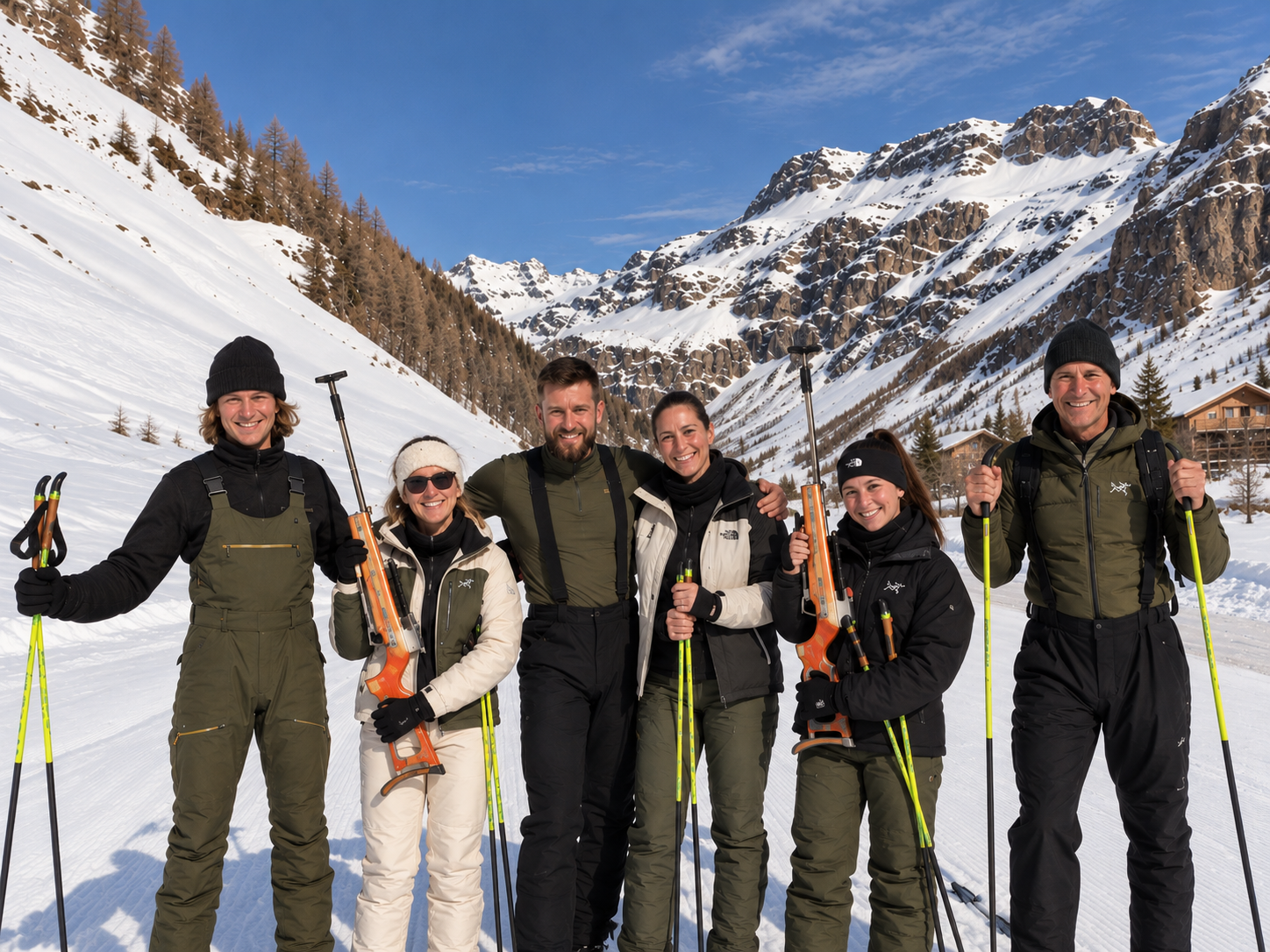
A family in biathlon.
A session designed to fit your needs
Of course, no two sessions at Nordic Base are exactly the same.
If the group picks things up quickly, we move along faster. If someone needs more time on the skis, we adjust the exercises. If the kids want to play, we play. And if everyone starts getting really competitive during the biathlon… we break out the stopwatches.
The goal isn't to check off a list of exercises in two hours.
The point is that everyone leaves having learned something, discovered two sports, and—most importantly—had a great time in the mountains.
